

Know Your Numbers
“Improving PAP therapy compliance”
Know Your Numbers is our data-driven CPAP compliance program built around
exceptional patient education
real-time monitoring
patient engagement and accountability.
1 . While other DME companies only delivery equipment - we deliver PROVEN results and think our unsolicited Google Reviews speak to the hands on care we provide:
2. Patient Education is key - Know your Numbers!
Day one at at setup, patients are educated about and empowered to reduce their AHI Number to less than 5 (less than 5 indicates clinical effectiveness).
Through wireless connectivity, we monitor each patients therapy and measuring their Compliance Number against the industry standard of Medicare compliance (which is using the PAP device 4+ hours per night).
Our MyAir mobile app reports the patient’s Sleep Number Score every morning and provides helpful tips on how to improve.
3. We engage!
Every day, our Care Team monitors adherence, intervenes early, gathers patient feedback, and collaborates with referring physicians during the critical first 90 days to assure patients regain the healthy sleep they need.
Our highly trained and educated Care Team is comprised of trained CPAP Technicians and Respiratory Therapists
We review our Trending PAP Compliance (seen below) to refine and improve our educational methods and standards.
ONeal Medical - CPAP Plus Trending PAP compliance
Bottom Line - Sleep apnea care is our single specialty
“Every Night Matters”
Onboarding
We believe that long term compliance starts with a high level of patient engagement from the point of referral:
Our Intake team sends automated notifications immediately when the PAP order is received via Parachute Health - Informs them step-by-step of the referral process
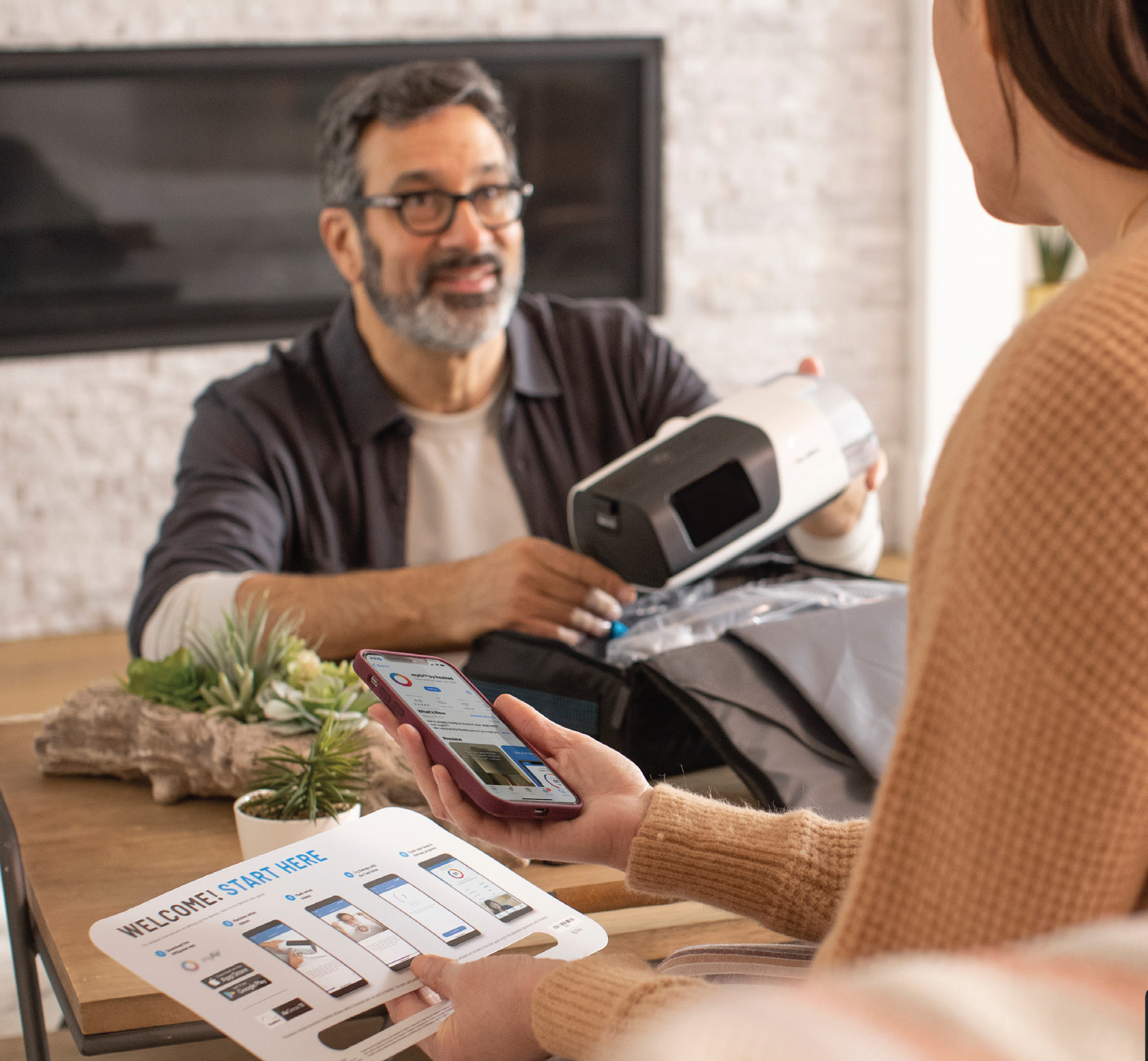
We send an invitation to each patient download and establish the myAir app before arriving at our office as well as an invitation to visit our educational that explains what to expect on their setup Link here
Patient is then scheduled for our Best In Class educational setup which last approximately 30 minute
Setup
Our Best In Class CPAP setup provides patients with a clear understanding of how their therapy works and their active role in achieving compliance.
It includes:
Explanation of Sleep Apnea and Treatment Goals: Simple overview of OSA and how CPAP therapy prevents symptoms and long-term complications
Device Orientation: Hands-on instruction on how to use, fill, and clean the CPAP device and humidifier
Mask Fitting and Comfort Tips: Personalized mask fitting, leak prevention, and troubleshooting
Usage Expectations: Clear explanation of CMS compliance standards (minimum hours and nights) and why consistent use matters for health outcomes and insurance coverage
myAir App Enrollment: Guidance on downloading, linking, and using ResMed myAir to track progress and receive feedback including their AirView Sleep Score Number
Follow-Up Support: Information on follow-up calls, troubleshooting resources, and how to contact the DME team for assistance
Together, these standardized steps ensure patients are informed, confident, and engaged—key drivers of long-term CPAP success and compliance.
Follow up
We actively schedule patients for a 3-day follow up visit
Phone call from our Care Team includes:
Mask comfort, seal, etc
Pressure intolerance
Device operation
Continued reinforcement of the patient’s responsibility to CMS Compliance Standards

Program White Sheet
“Know Your Numbers” Program
To: Sleep Medicine Physicians and Nurse Practitioners
From: O’Neal Medical – CPAP Plus
Subject: Advancing CPAP Adherence through Standardized, Evidence-Based Measurement
Dear Sleep Provider,
At O’Neal Medical – CPAP Plus, we are advancing a data-driven approach to improving patient adherence with positive airway pressure (PAP) therapy. Our initiative is built on the principle that adherence outcomes can only be meaningfully improved when they are measured consistently and analyzed objectively across a standardized population.
To that end, we have established a closed-system, or “walled garden,” model in which all new patients are equipped exclusively with ResMed PAP devices that feature integrated cellular connectivity to ResMed’s AirView™ clinical platform. This ensures uniform data capture and allows our clinical operations team to evaluate treatment adherence using the exact Centers for Medicare & Medicaid Services (CMS) definition of compliance—≥4 hours of therapy per night on at least 70% of nights during a consecutive 30-day period within the first 90 days.
Our baseline compliance rate across all active PAP users currently stands at 72% (90-day mean). Importantly, we are applying this same CMS-defined compliance metric to all patients—irrespective of payer requirements—to create a normalized dataset for longitudinal analysis. By doing so, we can evaluate adherence trends, identify behavioral or educational predictors of success, and measure the statistical impact of specific interventions over time.
Each patient is systematically onboarded through a standardized educational protocol and encouraged to engage with the ResMed myAir™ digital platform, which provides real-time feedback, daily performance scoring, and reinforcement messages shown in published studies to enhance adherence. The interaction between digital engagement, structured follow-up, and behavioral reinforcement constitutes the core of our continuous quality improvement (CQI) framework for CPAP adherence.
Our objective is to produce a scientifically valid understanding of which combinations of education, technology, and follow-up most effectively increase adherence rates and sustain long-term therapy use. We welcome clinical collaboration and data-sharing opportunities with providers who share this evidence-based vision for improving sleep outcomes.
Key Studies / Evidence Supporting Basis
Malhotra et al. (2018), “Patient Engagement Using New Technology to Improve Adherence to Positive Airway Pressure Therapy”
This large retrospective analysis compared an active patient engagement (APE) cohort (using myAir + AirView) to a matched usual-care monitoring cohort. The APE group had 87.3% meeting CMS adherence criteria vs. 70.4% in the usual care group (P < .0001).
Average nightly usage was 5.9 h vs. 4.9 h in the matched controls.
Franke et al. (2023), “Effect of a digital patient motivation and support tool on CPAP / APAP adherence and daytime sleepiness”
This prospective RCT (12-week duration) found that patients using a digital support tool (with automated feedback, motivational messaging, and therapy recommendations) had significantly greater adherence (mean usage ~338.8 min vs. 268.7 min; p = 0.002) compared to standard care.
Also, the intervention arm showed significantly greater reductions in daytime sleepiness (e.g. via Epworth Sleepiness Scale).
ResMed / myAir Studies & Reports
A ResMed retrospective white-paper observed that 83.9% of new CPAP users who used the myAir app (along with standard care) achieved Medicare adherence within 90 days; 75.4% achieved it within 30 days; median time to adherence was 23 days.
In one observational analysis of >128,000 PAP users, those using myAir + AirView had >87% compliance compared to ~70% compliance in those monitored by AirView alone (i.e. ~17–24% relative uplift).
ResMed’s own marketing and white-papers cite data showing that pairing myAir with AirView monitoring yields higher adherence, improved mask seal, and longer nightly usage vs. monitoring without myAir.
Lacroix et al. (2023), “Effectiveness of an Intervention Providing Digitally Generated Personalized Education and Feedback on CPAP Adherence”
This study (published in PMC) evaluated a digital feedback + personalized education intervention, and found significant positive effects on CPAP adherence compared to control.
Meta-analytic / Review Evidence (General Digital / eHealth Interventions)
A 2020 meta-analysis (Aardoom et al.) of eHealth interventions in CPAP adherence showed that digital interventions (including reminders, feedback, telemonitoring) were generally effective in improving adherence in adult OSA patients.
A scoping review by Rapelli et al. (2021) looked at motivational and behavioral interventions for CPAP adherence, concluding that such interventions (which may include feedback, coaching, reminders) are more effective than usual care in many trials.